Festive Herb Roast Turkey
Highlighted under: Party Snacks Recipes
I always look forward to the holiday season, especially when it comes to preparing the perfect turkey. For me, roasting a turkey is more than just dinner; it’s an expression of love and gratitude. This Festive Herb Roast Turkey not only captures the essence of the season with its fragrant herb blend but also becomes the centerpiece of our family celebrations. The method I use guarantees a juicy, flavorful bird every time, infusing traditional flavors with a touch of creativity that makes every bite memorable.
I believe the secret to a perfect turkey lies in the herbs and how you season it. I’ve experimented with various combinations, but the blend of rosemary, thyme, and sage always brings out the best flavor. By applying the herb mixture both inside and under the skin, the turkey absorbs all those wonderful aromatics during roasting, ensuring each slice is bursting with flavor.
One tip I’ve learned is to let the turkey rest after roasting. This not only makes it easier to carve, but it also allows the juices to redistribute throughout the meat—helping to keep it moist and tender. Trust me, that little extra time makes a huge difference!
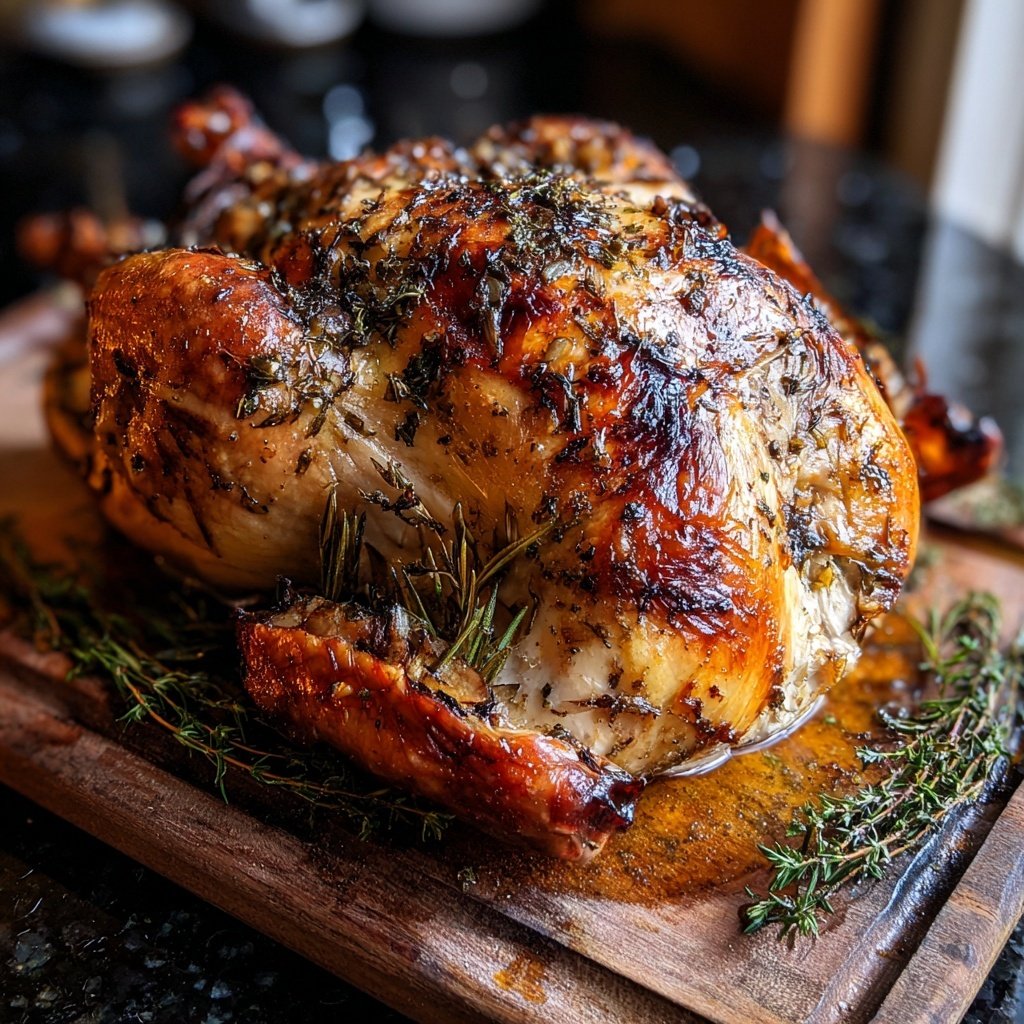
What You Will Love About This Recipe
- Aromatic blend of fresh herbs creating a mouthwatering flavor
- Juicy, tender meat that melts in your mouth
- A stunning centerpiece for any festive gathering
The Importance of Herb Butter
The herb butter is a crucial element in achieving the rich flavor this turkey boasts. It infuses the meat with moisture and depth, ensuring that every bite is tender and succulent. I love to let the butter sit at room temperature slightly before mixing in the herbs to allow for easier spreading and better absorption under the skin. This also ensures that the butter melts more rapidly while roasting, allowing the flavors to permeate the turkey evenly.
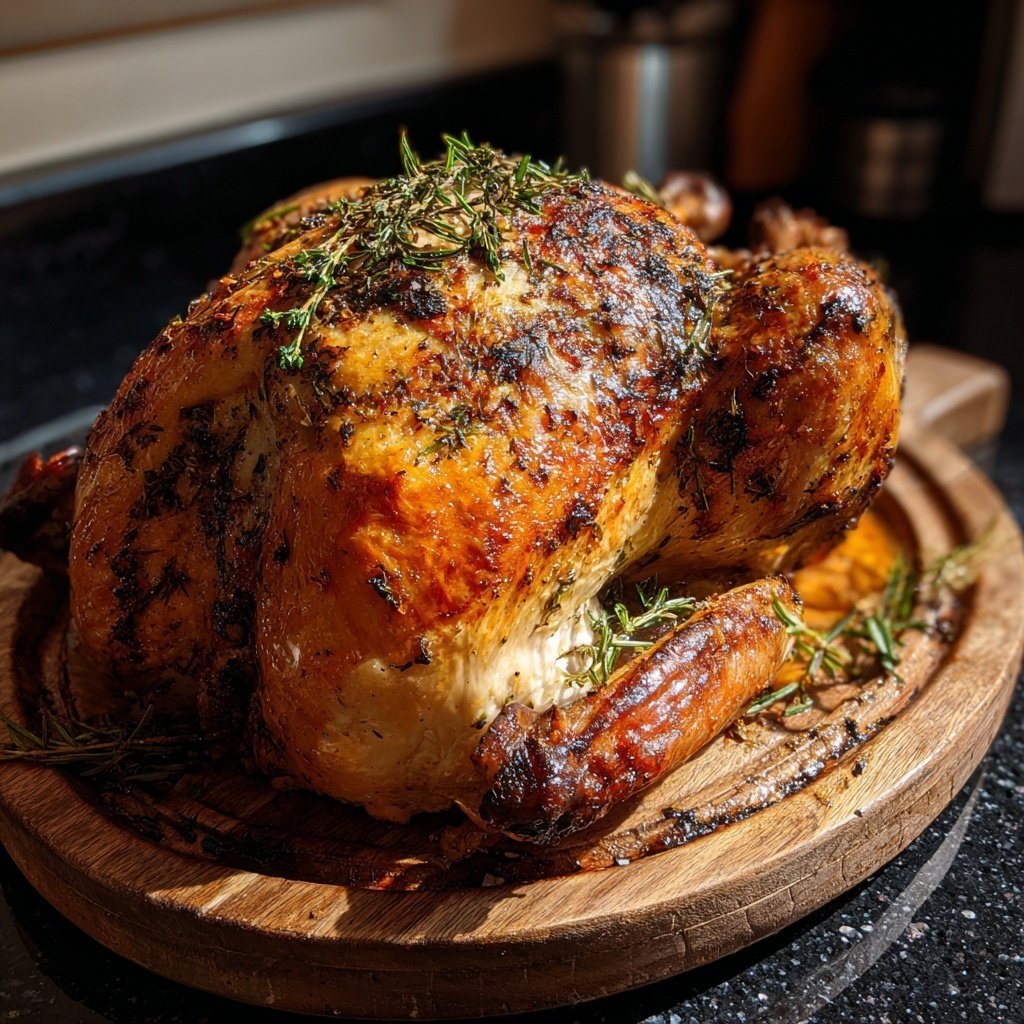
When seasoning the turkey, make sure to create pockets under the skin gently. This technique allows the herb butter to coat the meat directly rather than simply sitting on top. During roasting, the butter will melt down, continuously basting the turkey and creating a crispy, golden skin that contrasts beautifully with the juicy interior.
Choosing the Right Turkey
Selecting a high-quality turkey is essential for a successful roast. Aim for a turkey that is at least 14 pounds to ensure enough meat for serving a crowd, plus leftovers. Look for a bird that is all-natural or organic, as it usually has a richer flavor and less water added. Avoid self-basting turkeys, as they may contain additives that can alter the taste and texture of your dish.
If you're looking for a more sustainable option, don't hesitate to explore local farms or farmers' markets. Many offer the chance to purchase pasture-raised turkeys, which are often tastier and more ethically raised. Frozen turkeys are just as good and can be a more economical choice, but remember to give yourself enough time for a proper thaw in the refrigerator, allowing at least 24 hours for every 4-5 pounds.
Resting and Carving the Turkey
Resting the turkey after roasting is a non-negotiable step that allows the juices to redistribute throughout the meat. Pediatricians recommend letting it rest for at least 30 minutes, but if you can manage to keep it under foil for an hour, it will be even juicier. This resting period also allows the skin to crisp up further, enhancing that beautiful golden color that makes for a stunning presentation.
When it comes time to carve, use a sharp carving knife and a sturdy cutting board. Start by removing the legs and thighs, followed by the breast meat. Angle your knife against the grain for a more tender slice. If you want to impress your guests, consider presenting the turkey whole before carving, as it creates an inviting and impressive centerpiece at your festive gathering.
Ingredients
Gather the following ingredients to create the perfect Festive Herb Roast Turkey:
Ingredients for Turkey
- 1 (14 to 16 pounds) whole turkey, thawed
- 1/2 cup unsalted butter, softened
- 2 tablespoons fresh rosemary, chopped
- 2 tablespoons fresh thyme, chopped
- 2 tablespoons fresh sage, chopped
- 4 cloves garlic, minced
- Salt and pepper to taste
- 2 lemons, quartered
- 1 onion, quartered
- 4 cups low-sodium chicken broth
Ensure all ingredients are fresh for the best flavor!
Instructions
Follow these steps for a delicious Festive Herb Roast Turkey:
Prepare the Turkey
Preheat your oven to 325°F (165°C). Remove the turkey from its packaging and pat it dry with paper towels. Move the turkey to a roasting pan, breast side up.
Make the Herb Butter
In a bowl, combine softened butter, rosemary, thyme, sage, garlic, salt, and pepper. Mix well until a paste forms.
Season the Turkey
Gently slide your fingers under the skin of the turkey breast and thighs to create pockets. Spread half of the herb butter inside these pockets. Rub the remaining herb butter evenly over the entire turkey skin.
Stuff the Turkey
Stuff the cavity of the turkey with the quartered lemons and onion. This adds moisture and a lovely aroma during cooking.
Roast the Turkey
Pour the chicken broth into the roasting pan and cover loosely with aluminum foil. Roast in the preheated oven for about 2.5 to 3 hours, or until the internal temperature reaches 165°F (75°C) in the thickest part of the thigh.
Let it Rest
Once cooked, remove the turkey from the oven and tent it with foil. Let it rest for at least 30 minutes before carving to allow the juices to redistribute.
Now you’re ready to carve and serve your beautifully roasted turkey!
Pro Tips
- Always use a meat thermometer to ensure your turkey is cooked to perfection. This prevents overcooking and helps to keep the meat juicy.
Make-Ahead Tips
One of the advantages of this Festive Herb Roast Turkey recipe is that certain components can be prepared in advance. You can mix the herb butter and store it in the refrigerator for up to three days before roasting. Simply bring it back to room temperature and proceed with seasoning the turkey as instructed.
You can also prep the vegetables (lemons and onions) the day before. Store them in an airtight container in the refrigerator. This small step saves you time on the big day and keeps your mind focused on other equally important aspects of your holiday feast.
Common Troubleshooting Tips
If you find your turkey’s skin is browning too quickly, simply cover it loosely with aluminum foil to prevent burning while it continues to roast. Conversely, if the bird is taking longer to cook than expected, ensure your oven is calibrated correctly and consider raising the temperature slightly to expedite the cooking process, while monitoring to avoid drying out the meat.
In case of an undercooked turkey, return it to the oven immediately, checking the internal temperature frequently as it continues to roast. It's essential to focus on the thickest part of the thigh, as this is where the meat usually remains the most resistant to proper cooking.
Storage and Reheating Methods
After the feast, store leftover turkey in airtight containers and refrigerate within two hours for the best quality. The turkey will keep in the fridge for up to four days or can be frozen for up to three months. Make sure to slice or shred the meat for more convenient storage, as this allows it to cool down faster and aids in easier reheating.
When you're ready to enjoy those leftovers, the best method is to reheat in the oven at 325°F (165°C) with a little broth or gravy to prevent drying out. Cover the dish with foil to retain moisture. Heat until warmed thoroughly, reaching an internal temperature of 165°F (75°C), ensuring you enjoy turkey that’s just as succulent as when it was freshly roasted.
Questions About Recipes
→ Can I brine the turkey before roasting?
Yes, brining the turkey overnight can enhance the flavor and moisture.
→ What should I do with leftovers?
Leftover turkey is great for sandwiches, soups, or salads. Be creative!
→ How long should I thaw a frozen turkey?
Thaw the turkey in the fridge for about 24 hours for every 4-5 pounds.
→ Can I use dried herbs instead of fresh?
Yes, but use about one-third of the amount, as dried herbs are more concentrated.
Festive Herb Roast Turkey
Created by: The Jackiesrecipes Team
Recipe Type: Party Snacks Recipes
Skill Level: Intermediate
Final Quantity: 8 servings
What You'll Need
Ingredients for Turkey
- 1 (14 to 16 pounds) whole turkey, thawed
- 1/2 cup unsalted butter, softened
- 2 tablespoons fresh rosemary, chopped
- 2 tablespoons fresh thyme, chopped
- 2 tablespoons fresh sage, chopped
- 4 cloves garlic, minced
- Salt and pepper to taste
- 2 lemons, quartered
- 1 onion, quartered
- 4 cups low-sodium chicken broth
How-To Steps
Preheat your oven to 325°F (165°C). Remove the turkey from its packaging and pat it dry with paper towels. Move the turkey to a roasting pan, breast side up.
In a bowl, combine softened butter, rosemary, thyme, sage, garlic, salt, and pepper. Mix well until a paste forms.
Gently slide your fingers under the skin of the turkey breast and thighs to create pockets. Spread half of the herb butter inside these pockets. Rub the remaining herb butter evenly over the entire turkey skin.
Stuff the cavity of the turkey with the quartered lemons and onion. This adds moisture and a lovely aroma during cooking.
Pour the chicken broth into the roasting pan and cover loosely with aluminum foil. Roast in the preheated oven for about 2.5 to 3 hours, or until the internal temperature reaches 165°F (75°C) in the thickest part of the thigh.
Once cooked, remove the turkey from the oven and tent it with foil. Let it rest for at least 30 minutes before carving to allow the juices to redistribute.
Extra Tips
- Always use a meat thermometer to ensure your turkey is cooked to perfection. This prevents overcooking and helps to keep the meat juicy.
Nutritional Breakdown (Per Serving)
- Calories: 380 kcal
- Total Fat: 26g
- Saturated Fat: 15g
- Cholesterol: 195mg
- Sodium: 85mg
- Total Carbohydrates: 32g
- Dietary Fiber: 3g
- Sugars: 24g
- Protein: 6g